
5 Common Aggregate Mistakes That Can Compromise Concrete Strength
February 3, 2026
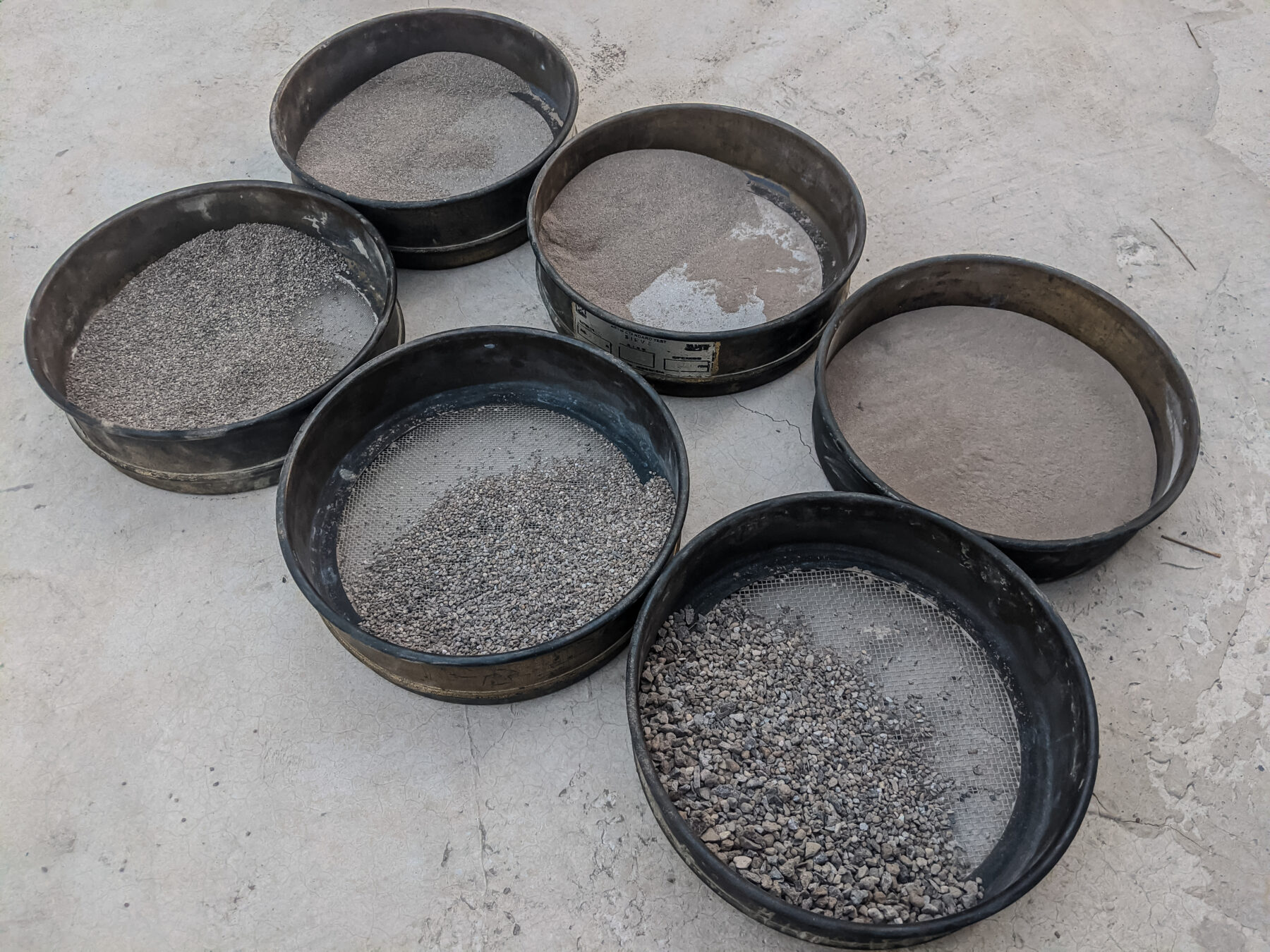
While cement chemistry often draws attention, aggregates quietly influence load distribution, crack resistance, and long-term durability. When aggregate decisions drift out of alignment with project demands, strength diminishes gradually and often without early indicators. Recognizing where these missteps occur brings clarity to how aggregates support concrete performance from mix design through service life.
- Using Poorly Graded Aggregates
Aggregate gradation governs how efficiently particles interlock within the concrete matrix. When size distribution lacks balance, excess voids form between particles, forcing cement paste to fill the gaps. This reliance on paste increases shrinkage potential and weakens the hardened structure as curing progresses.
Well-graded aggregates establish a dense internal framework where particles reinforce one another under load. This improved packing reduces paste demand while strengthening load transfer throughout slabs and structural elements. Strength is achieved not through added cement, but through thoughtful aggregate distribution that supports long-term stability.
- Allowing Contaminants to Remain in Aggregates
Aggregates containing clay, silt, or organic matter introduce hidden weaknesses into concrete. These fine materials coat aggregate surfaces, limiting direct contact between cement paste and stone. As a result, bond strength diminishes and compressive capacity declines over time.
Clean aggregates support proper hydration by allowing cement paste to adhere as intended. Controlled washing and responsible storage protect material quality before batching begins. Preserving aggregate cleanliness reinforces concrete strength from placement through extended service conditions.
- Overlooking Aggregate Shape and Surface Texture
Aggregate shape influences how concrete resists movement once loads are applied. Rounded particles improve workability but reduce internal friction, which can limit strength in structural applications. Highly angular particles increase interlock but require careful proportioning to maintain placement consistency.
Surface texture further affects bonding behavior. Rough-textured aggregates promote stronger mechanical adhesion with cement paste, improving load resistance after curing. Selecting aggregates with the right balance of shape and texture supports both constructibility and structural integrity.
- Failing to Account for Aggregate Moisture Content
Moisture conditions within aggregates directly affect the water-cement ratio. When surface moisture fluctuates without adjustment, mix consistency and strength vary from batch to batch. Excess moisture introduces unintended free water, while dry aggregates absorb mix water during batching.
Monitoring moisture levels keeps mix proportions aligned with design intent. Accounting for absorption characteristics preserves predictable strength development during curing. Consistent moisture control ensures concrete performs uniformly from production through placement.
- Skipping Aggregate Performance Testing
Aggregate properties vary widely in durability, strength, and environmental response. Selecting materials without performance verification introduces uncertainty, particularly in applications exposed to heavy loads or seasonal cycling. Over time, unsuitable aggregates compromise concrete integrity under repeated stress.
Performance testing confirms aggregate suitability for specific structural demands. Verifying abrasion resistance, soundness, and durability reduces long-term risk. Testing transforms aggregate selection into a deliberate, performance-driven decision.
Strength Built on Aggregate Discipline
Concrete strength is the result of precision at the material level. Each aggregate decision influences how structures respond to load, climate, and time. Addressing these common mistakes reinforces concrete from within, supporting consistency across a wide range of applications.
When aggregates are treated as engineered components rather than interchangeable materials, concrete systems gain reliability and resilience. Disciplined selection and handling strengthen structures designed to deliver lasting value well beyond initial curing.