
What Is Air-Entrained Concrete and When Should It Be Used?
October 1, 2026
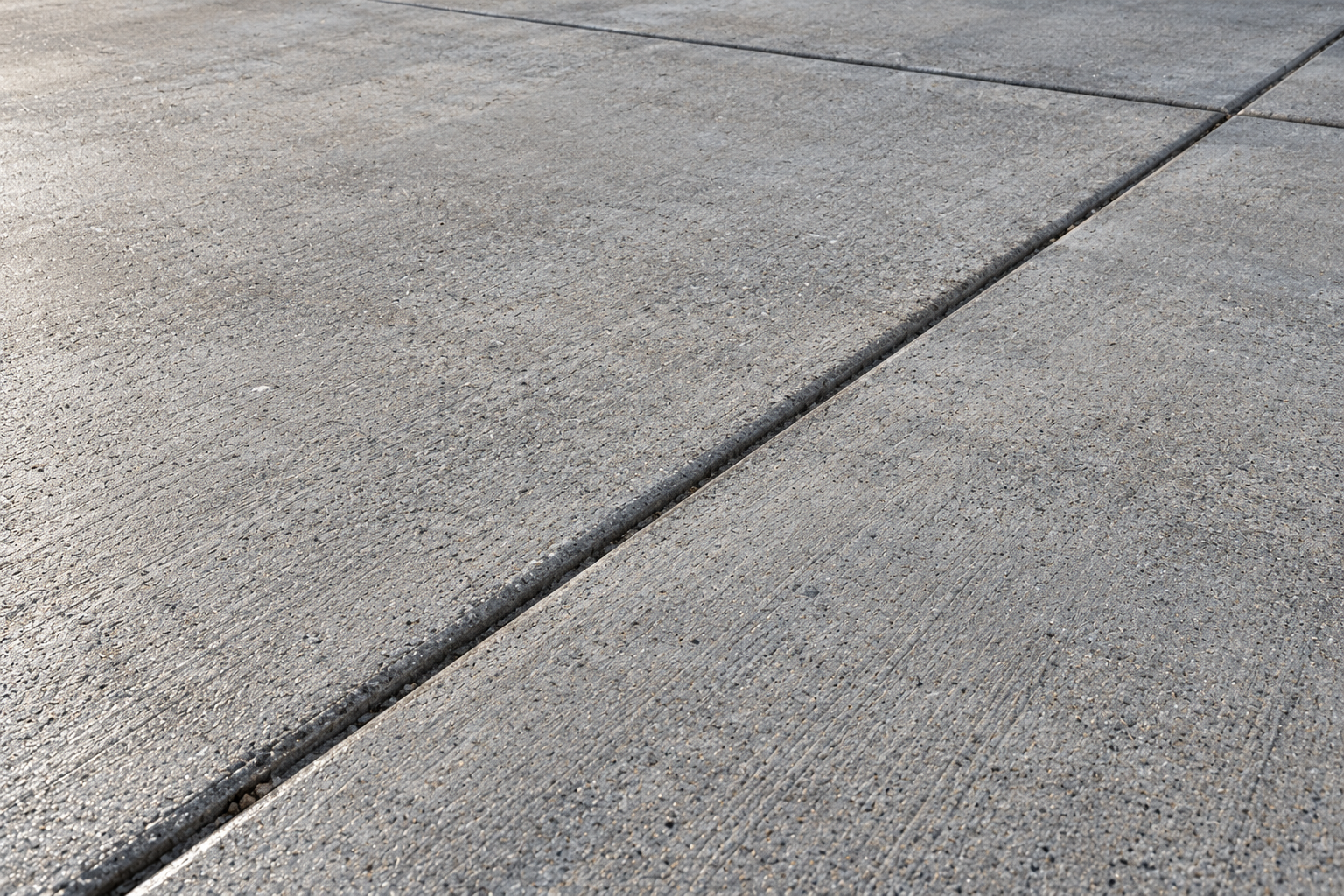
Air-entrained concrete is concrete made with tiny, evenly distributed air bubbles that protect the slab from freeze-thaw damage. It is most commonly specified for exterior concrete exposed to moisture and repeated freezing temperatures, including flatwork such as driveways, walkways, patios and curb and gutter, as well as exposed foundation walls and other surfaces that face open weather year-round. The added air content slightly adjusts the mix design, but it plays a critical role in long-term durability by relieving the internal pressure that builds when trapped water freezes and expands.
That choice, which concrete mix to specify, happens early, at the mix design stage, long before a truck reaches the site. In climates where winter mornings drop below freezing while afternoons climb back above it, an exposed slab can cross the freezing point several times in a single week. Specifying the right mix from the start is what decides how that surface holds up over time.
Inside an Air-Entrained Mix
Air entrainment starts with an admixture added at the batch plant, a chemical that lowers the surface tension of the mix water enough to trap tiny, evenly spaced air bubbles throughout the paste as it mixes. Those bubbles measure a few thousandths of an inch across, small enough that thousands fit within a single cubic inch of hardened concrete and spaced closely enough that few sit more than a hair’s width from the next one.
That’s different from entrapped air, the larger, randomly placed voids that form in any concrete that isn’t consolidated well during placement, and that weaken the mix rather than protect it.
Air content works alongside aggregate selection and cement paste in setting a pour’s final compressive rating, a relationship covered in more depth in The Science of Concrete Strength: How Aggregates Make a Difference.
How Does Air-Entrained Concrete Resist Freeze-Thaw Damage?
Water expands by roughly nine percent when it turns to ice, and inside ordinary concrete that expansion pushes outward against the surrounding paste with nowhere to go. Air-entrained concrete gives that expanding water somewhere to go instead: the bubble network sits close enough together that freezing water can move into the nearest air pocket rather than forcing the paste apart from the inside.
Repeated across a winter of thawing afternoons and freezing nights, that pressure-relief effect keeps a slab’s surface smooth and intact rather than scaling and flaking away year over year.
A desert climate that cycles through overnight freezes and afternoon thaws creates exactly that pattern. An exposed slab can cross the freezing point several times in a single week rather than settling into one long, steady freeze, which puts far more cumulative stress on the surface than a colder region with a single sustained freeze season.
When Should Air-Entrained Concrete Be Used?
Exterior flatwork carries the strongest case for air entrainment: driveways, sidewalks, patios, curb and gutter and any exposed foundation or retaining wall that sits in open weather through the winter months. Those surfaces see direct sun, standing moisture and every overnight freeze the season brings, which is exactly the combination the bubble network is built to handle.
Interior slabs rarely cross the freezing point at all, whether it’s a garage floor under a conditioned space, an interior footing or a foundation wall already backfilled. Calling for air-entrained concrete there adds cost without a matching benefit anywhere in the slab’s service life.
Irrigation adds a wrinkle specific to this region: a patio or walkway bordering irrigated turf or landscaping can see more repeated wetting than local rainfall alone would suggest, which pushes that surface toward the exterior side of the decision even when the rest of the site stays dry.
How Much Air Content Is Enough?
A mix design calls for air-entrained concrete at a target air content, typically somewhere between 4 and 8 percent of the concrete’s total volume depending on the maximum aggregate size and how severe the exposure is expected to be. That target isn’t free: each added percentage point of air can trim the mix’s compressive rating by roughly 5 percent, so a properly designed mix adjusts its cement paste and water content to hold the target rating rather than adding air on top of an otherwise unchanged design.
The aggregate itself factors into that target too, since gradation and maximum particle size shift how much air a given mix actually needs to reach the same protection. Plants confirm the result before the pour starts by checking a sample straight from the truck rather than relying on the batch ticket alone.
Matching Air Content to the Pour
Settle the air content before the concrete is batched, alongside the mix’s compressive strength, aggregate size and other project requirements. For exterior flatwork and exposed concrete facing repeated freezing and moisture, that specification puts the protective air-void system into the mix before it ever reaches the forms.
American Rock Products batches both standard and air-entrained concrete at plants across the region. Talking through the surface, exposure conditions and mix requirements when ordering gives the local team what it needs to match the ready-mix to the pour.
Frequently Asked Questions
Does Air-Entrained Concrete Cost More Than Standard Ready-Mix?
Yes, air-entrained concrete usually costs a little more per yard than a standard mix. The added admixture and the paste adjustments needed to hold the target compressive rating both raise the batch cost.
That premium stays small next to the cost of resurfacing exterior flatwork within a few winters. Most specifications call for freeze-thaw resistant concrete by default on any exposed exterior pour rather than treating it as an optional upgrade.
Can Air Be Added to Concrete After It Has Been Poured?
No. Air entrainment has to happen at the batch plant, while the mix is still fluid enough for the admixture to spread bubbles evenly through the paste.
Once concrete sets, there is no way to add that protection after the fact. That is why the decision belongs at the mix design stage, not something to revisit once a slab already shows wear. For an exterior pour, settle the air content before ordering the ready-mix.
Is Air-Entrained Concrete Only Necessary in Heavy Snowfall Regions?
No. Exposure severity depends on how often a surface crosses the freezing point and whether it stays wet when that happens, not on total snowfall.
A dry climate with frequent overnight freezes and daytime thaws can call for the same air content as a much snowier region. An exterior pour in a desert climate that cycles through freezing nights and thawing afternoons gets specified as cold weather concrete for exactly that reason, even in a year with almost no snow at all.
Does Air Entrainment Change How Concrete Finishes or Looks?
Air-entrained concrete finishes a little differently than a standard mix, because the added bubbles change how the surface responds to a trowel or broom during placement.
Crews adjust their finishing technique rather than the concrete’s final appearance. Once cured, an air-entrained slab looks the same as a standard one, delivering freeze-thaw protection without a visible difference in the finished surface.
How Much Air Content Does Exterior Concrete Need?
Most exterior concrete calls for a target air content between 4 and 8 percent of the total volume, set by the maximum aggregate size and the expected severity of exposure.
Each added percentage point of air can trim compressive strength by roughly 5 percent, so a well-designed mix balances its paste and water content to hold the target rating. Plants confirm the result before the pour by testing a sample straight from the truck rather than relying on the batch ticket alone.
What Types of Projects Should Use Air-Entrained Concrete?
Use air-entrained concrete for any exterior surface exposed to moisture and repeated freezing. Common applications include driveways, sidewalks, patios, curb and gutter and exposed foundation or retaining walls.
Interior slabs rarely cross the freezing point, so a garage floor under conditioned space or a backfilled foundation wall gains little from the added air. One regional wrinkle: a patio or walkway bordering irrigated turf can see more repeated wetting than local rainfall alone suggests, which pushes that surface toward the exterior side of the decision.
Where Can I Order Air-Entrained Ready-Mix Near Me?
American Rock Products supplies both standard and air-entrained ready-mix concrete at plants across the region. Talking through the surface type, exposure conditions and mix requirements when ordering gives the local team what it needs to match the right concrete to the job.